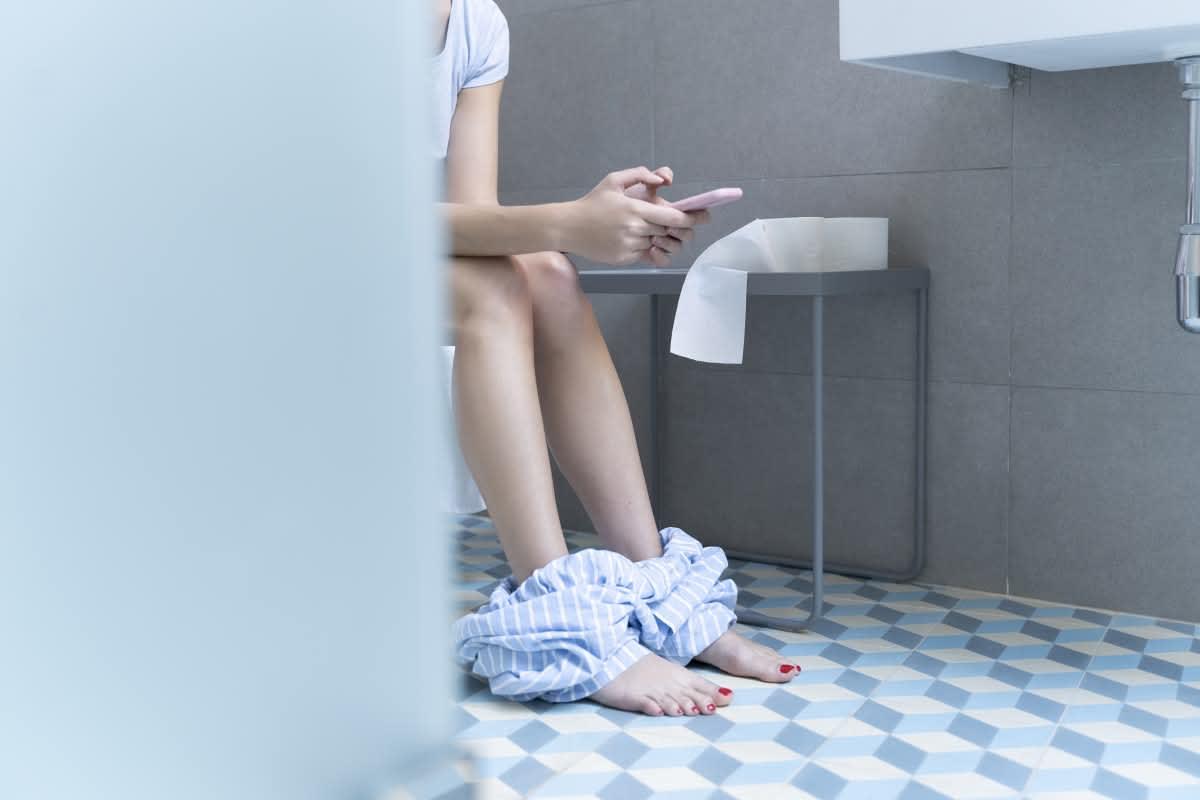
Continued constipation and/or discomfort in passing stool must be checked with a doctor because it may be a symptom of irritable bowel syndrome or Crohn’s disease, Dr. Lance Uradomo, an interventional gastroenterologist at City of Hope Orange County advised. However, the doctor warned that the need to overstay in the toilet could also be a potential symptom of cancer. “If a growth inside the colon grows big enough, it can block the flow of your stool, which can cause constipation and bleeding,” Uradomo added. Cases of colorectal cancer have surged among people under 55 since the mid-1990s, per a report by the American Cancer Society.
Most experts advise spending a maximum of 10 minutes on the toilet, relieved or not. This is because force straining can be harmful to the anus and pelvis. Dr. Xue recommended walking around for a while to stimulate bowel movements. Regular consumption of high-fiber foods and proper hydration are also essential for a healthy flow of stool. Moreover, any distracting items like magazines, phones, and books should be kept out of the bathroom. “You don’t want to go with the mindset that you will be there for a long time. Because then you’ll want to bring something to keep the mind occupied. Make sitting on the toilet bowl as uninteresting as possible,” another expert, Dr. Farah Monzur, director of the Inflammatory Bowel Disease Center added.
Dr. Monzur highlighted that pelvic muscles are strained out due to extended periods of lounging on the toilet seat. Also, forced straining can add pressure to the veins and blood vessels around the anus, causing hemorrhoids. Mindlessly scrolling on phones for a long time can result in weakened anal muscles, hemorrhoids, and rectal prolapse. The latter is highly risky because the rectum slips down and extends out of the anus, per the source. “Nowadays, we’re seeing an increase in people passing more time on the toilet, and that is very much unhealthy for the anorectal organs and the pelvic floor,” Dr. Xue pointed out.