
Camera Traps Finally Capture Rare ‘Ghost of the Canopy’ Wild Cat in Remote Guatemala Forest
Published Feb. 25 2026, 8:46 a.m. ET

Margay, aka the ghost of canopy, gets captured in a trail camera.
Within a dense forest engulfed in darkness, an elusive creature stepped into the light. The margay (Leopardus wiedii) is a wild cat species with acrobatic abilities of a monkey. The rare breed traverses through the high forest canopy, weaving its own paths through the tree branches. Also known as the ghost of the canopy, these creatures are extremely rare to be seen by onlookers or forest dwellers. They spend the early hours of the day above the forest floors and only step down at night. The Coral Maya Conservation had planted trail cameras in a "very remote" cloud forest and captured a margay moving like a whisper. "Its ankles rotate so it can climb down headfirst, hunt above the forest floor, and they move through the night almost unseen," they wrote in a post.
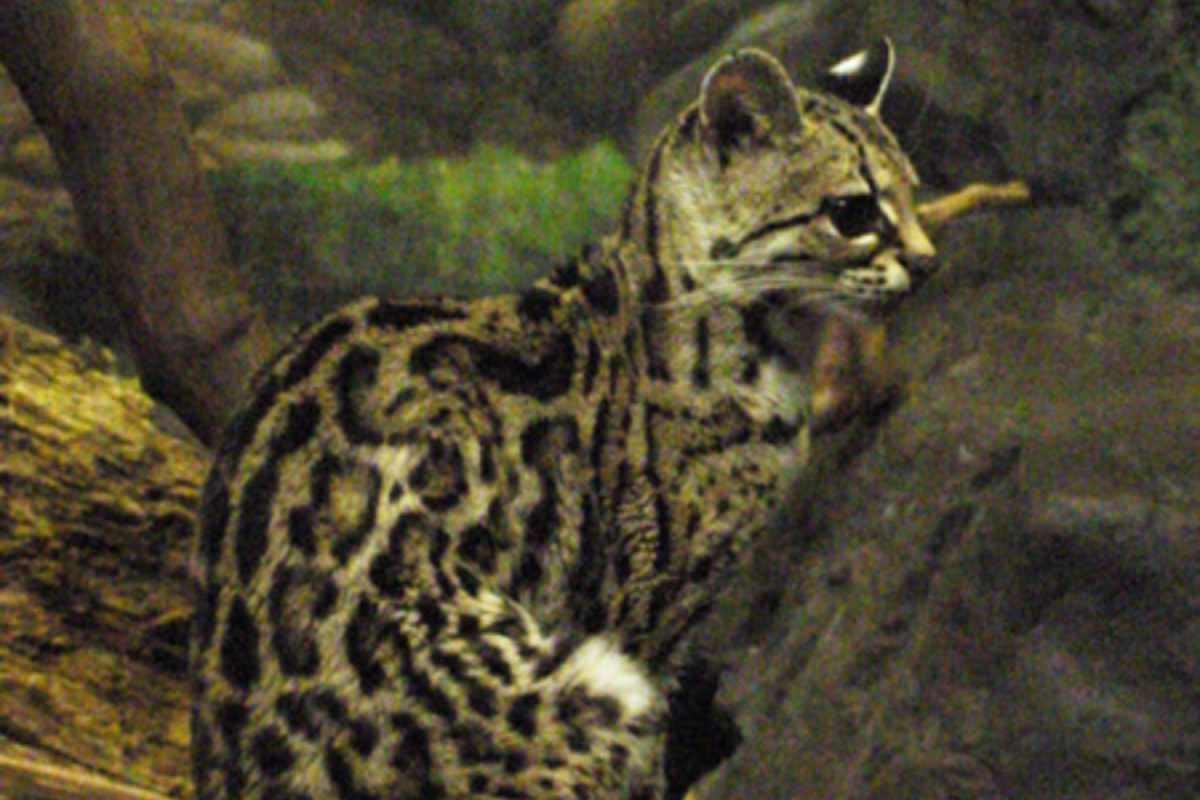
Close-up picture of a margay or Leopardus wiedii.
“Most people will never see one in their lifetime. Camera traps are often the only proof they’re still here,” the organization added. Experts believe this sighting is not just a species; it’s a sign of the remote forest's revival. “This is what resilience looks like, this remote forest survives despite humans, not because of humans,” they wrote. Despite being bombarded by environmental threats and being neglected for decades, the remote areas of Guatemala have survived, still hosting the elusive wildcat. “An area facing constant threats, neglected for decades, is still fighting to survive against greed and poor organizational and governmental choices,” the caption added.
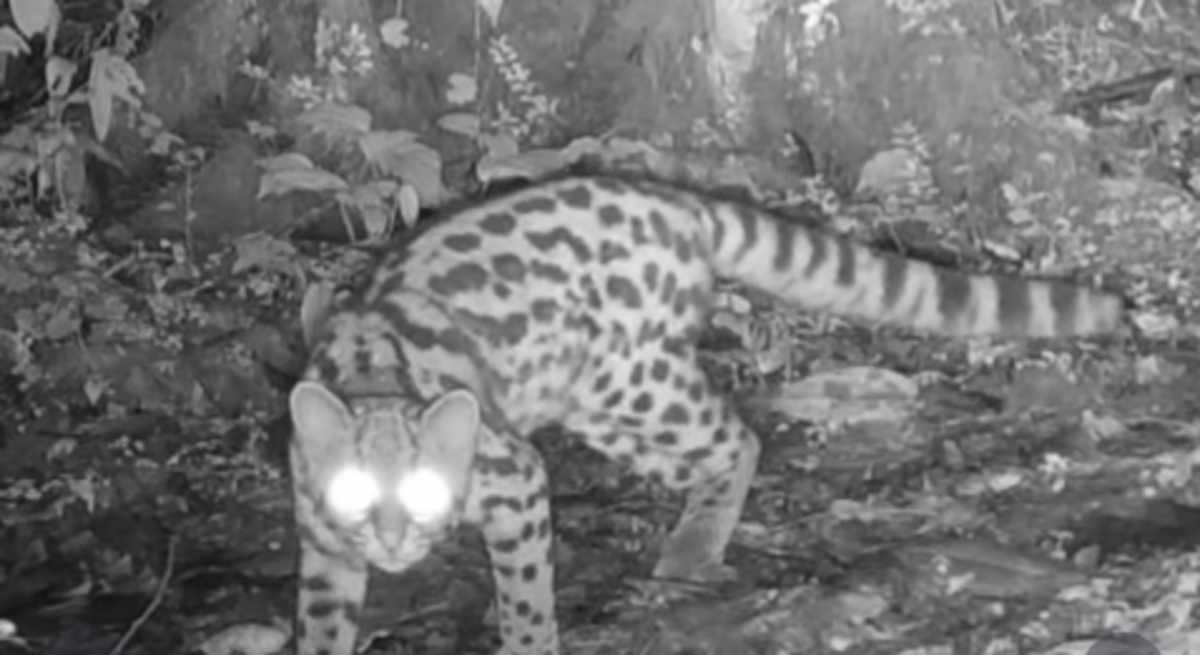
Margay (Leopardus wiedii) captured in a forest trail camera.
In the video, the wildcat’s eyes were glowing a serene white as it drifted ahead of the camera. At one point, the mysterious creature looked into the trail camera, but went away. Captured from a few differently angled trail cameras, the wildcat was seen roaming freely across the forest floor. However, it kept gazing at the camera and looking around as if sensing potential dangers. These climbing cats found in the Central and South American jungles are extremely flexible, allowing them to easily move through the trees above the forest floor. Cats are known to hit the perfect landing whenever they fall, and this wild species is extraordinary at that. It can even catch itself mid-air with one paw and pull back up, as per Discover Wildlife.
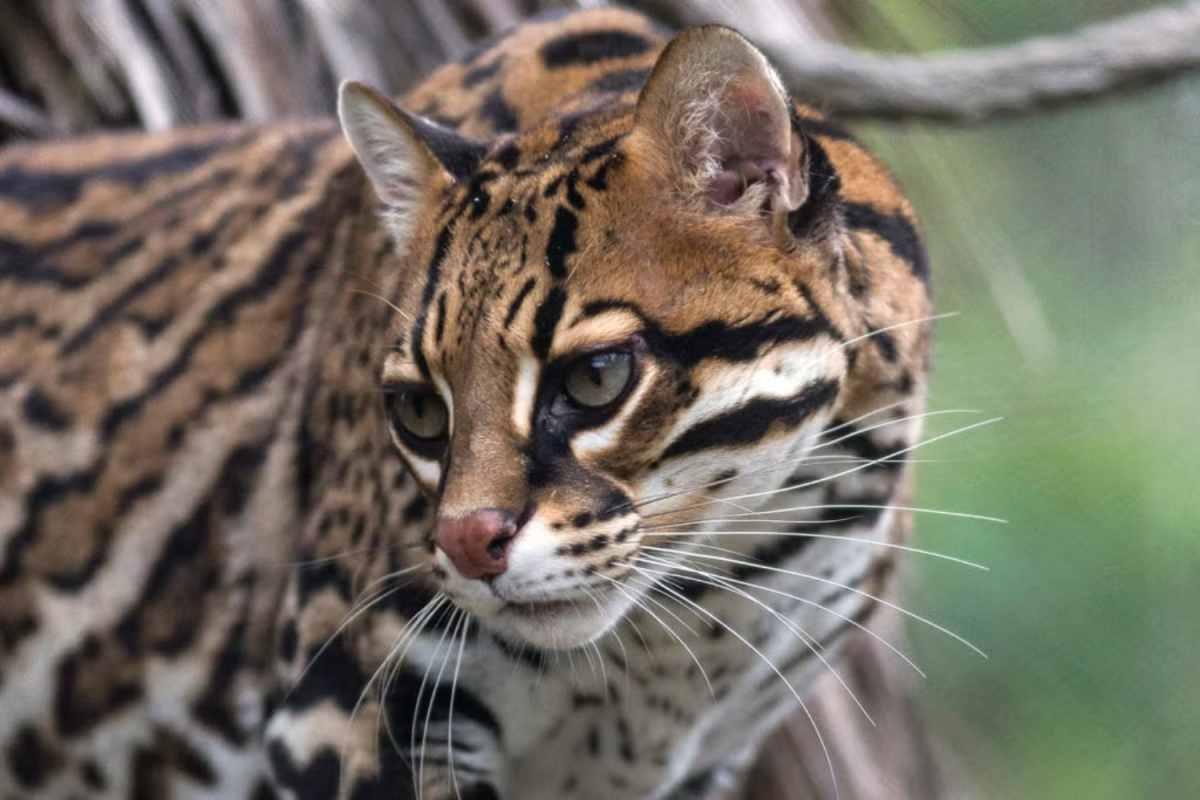
Ocelots are the older cousin of the margay.
In appearance, these cats have large and dark patches all over their bodies. These marks resemble those of their larger cousins, the ocelots (Leopardus pardalis). Therefore, in some regions, these wildcats are nicknamed “little ocelot” or “tree ocelot.” Although they may seem small, especially for a wild animal, they are larger than the regular house cats. Their fur is often yellowish-brown or tan, decorated with dark brown or black spots. Their large and widely spaced eyes are one of their standout features, along with two highlighted black stripes on their cheeks. While ocelots also have large eyes, those of the margay are larger and dark orangey-brown in color. They are about 46-69cm (1.5 to 2.3 feet) in height, excluding the 23-52cm (0.75 to 1.7 feet) long tail. Margays weigh between 2.3kg and 4.9 kg, which is between 5 and 10 pounds.
Once, these elusive creatures were hunted and exploited for their gorgeous coat, and as a result, their population dropped. An eventual ban on the trade of their coat prevented the species from further declining. However, due to a lack of conservation efforts, their number remains lower.