
or
Sign in with lockrMail

Alpine Cheese is Slowly Disappearing From Store Shelves and The Reason Behind It Is Truly Worrying

By

Published June 22 2025, 8:46 a.m. ET

(L) An Austrian cheese shop owner slicing a wheel of cheese. (R) Rows of Swiss Alpine cheese stored. (Representative Cover Image Source: Getty Images | (L) Reed Kaestner, (R) Fotogaby)

(L) An Austrian cheese shop owner slicing a wheel of cheese. (R) Rows of Swiss Alpine cheese stored. (Representative Cover Image Source: Getty Images | (L) Reed Kaestner, (R) Fotogaby)

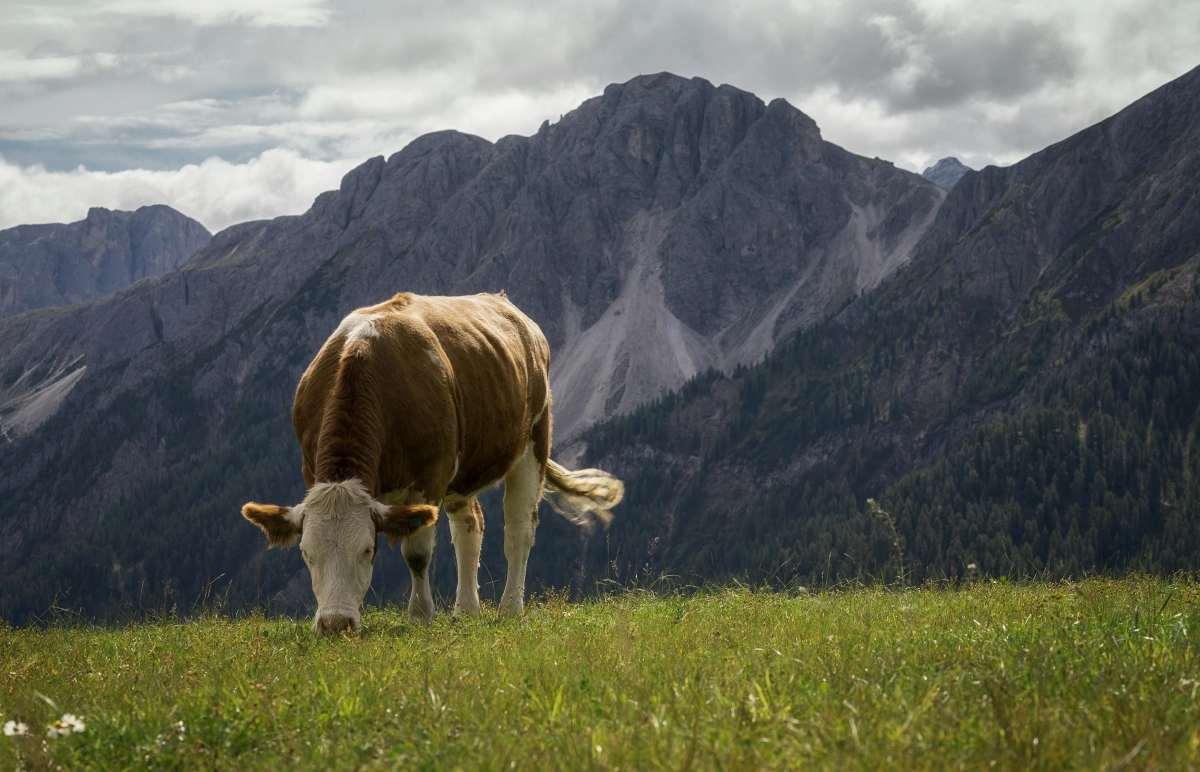
Up above in the towering mountains of Europe, cow herders diligently follow a tradition called “transhumance” every year. At the arrival of early spring, when the blanket of snow enshrouding the Alps starts melting away, these herders take their cows into higher mountain grounds, so they can feed on fresh meadow grass and produce bounteous quantities of milk, per CGTN Europe. They haul pails full of milk and pour it into cauldrons placed upon the stove, waiting for it to convert into cheese. Nowadays, this tradition seems to be disappearing from the Alpine mountains, and so does Alpine cheese.
Article continues below advertisement
pn/c e d aae bffad
Source: Representative Image Source: Pexels | travis blessing

A white and brown cow near the mountains.

When Hannah Howard, a food writer for Food & Wine, visited a cheese cave in Italy’s Valle d’Aosta, she discovered that most of the shelves were empty. Howard, who “loves stinky cheese,” was disheartened. She delved deeper into the declining production of one of Italy’s iconic mountain cheeses and discovered the real reason. “Fontina producers are making significantly less cheese than usual, brought on by a perfect storm of challenges: climate shifts, rising costs, labor shortages, and changing consumer habits,” Howard described.

Advertisement
More from Green Matters

According to The Spruce Eats, Alpine cheeses come in a wide range of flavors, from nutty to fruity, from spicy to herbal, from floral to buttery, and more. Semisoft in texture, the cheeses are good at melting. Many of them also have “holes” or “eyes” as seen often in the infamous Swiss cheese. Howard shared that these cheeses go well with wines like a Beaujolais cru or drier white wines like Sancerre.

Emma Fuchs, an Austrian cheesemaker, spends her summers in the Allgäu Alps with her husband Richard, making a type of cheese called Alpe Loche. The cheese matures for a year in a stone cellar tucked under their home. She shared with Food & Wine that one reason for vanishing Alpine cheese is “climate change.” The seasons are shifting. “We used to go up the mountain in early June. Now, we go in early May,” she explained. 

Michele Buster, co-founder of Forever Cheese and creator of Save the Shepherd, is taking measures to debunk this mythical image and inspire young people to participate in cow grazing and cheesemaking. “We need to stop picturing cheesemakers as mountain men with walking sticks,” said Buster. “There’s incredible technology and innovation happening. This work can be modern. It can be cool. But we need to show that.”

Latest Food News and Updates

    © Copyright 2026 Engrost, Inc. Green Matters is a registered trademark. All Rights Reserved. People may receive compensation for some links to products and services on this website. Offers may be subject to change without notice.